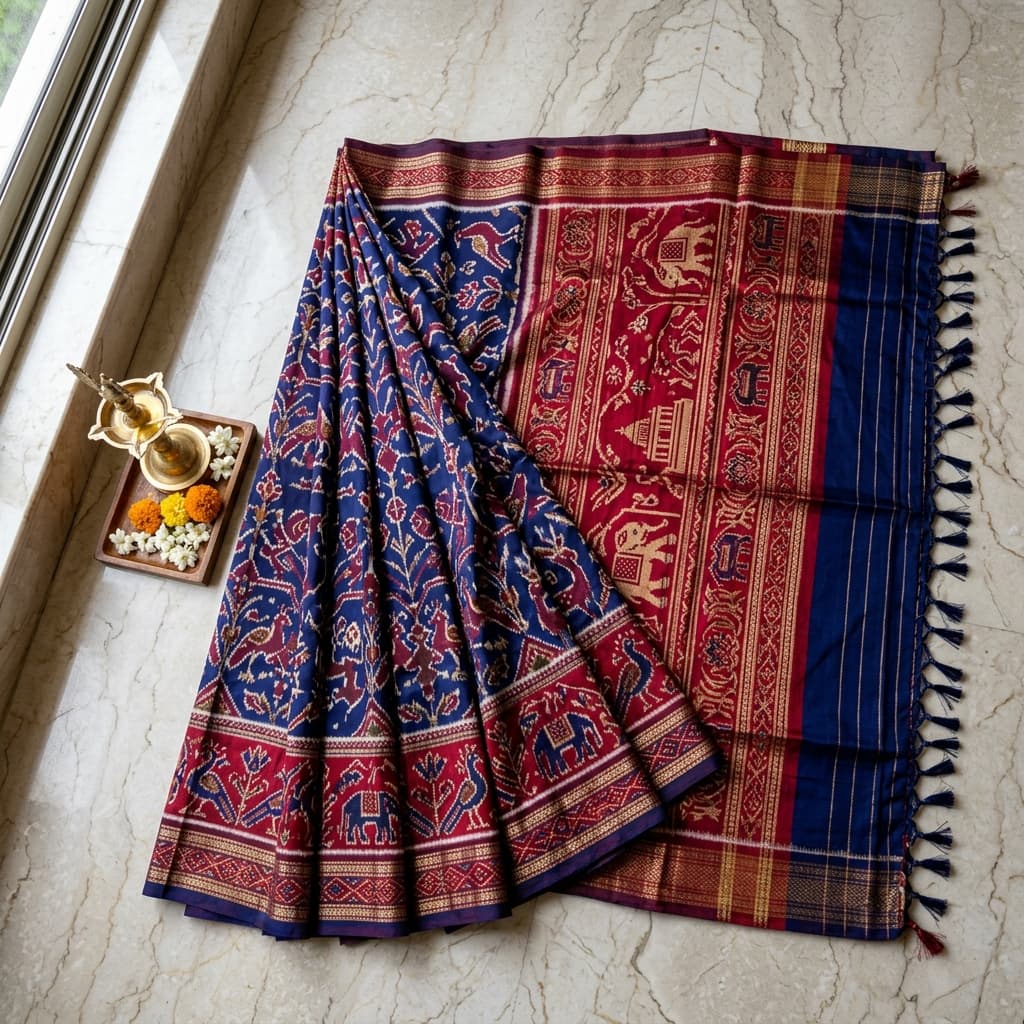
The Significance of August 1st: Sambalpuri Din
August 1st marks the birth anniversary of Guru Satyanarayan Bohidar (1913–1980), revered as the founding pioneer of Sambalpuri language, literature, and cultural consciousness. On this day, Western Odisha and handloom lovers across the world come together to celebrate Sambalpuri Din (Sambalpuri Day) — a festival of linguistic pride, indigenous art, and world-renowned Ikat handloom weaving.
Who Was Guru Satyanarayan Bohidar?
Born in Sonepur and dedicated to the cultural renaissance of Sambalpur, Guru Satyanarayan Bohidar spent his life documenting and promoting Sambalpuri language and folk traditions. He authored foundational dictionaries, grammar texts, and poetry in Sambalpuri, giving formal identity to the rich oral traditions of Western Odisha. His vision inspired generations to take pride in their native dialect, music (such as Dalkhai, Rasarkeli, and Sajani), and traditional crafts.
The Thread That Binds: Sambalpuri Ikat & Cultural Identity
Just as Guru Satyanarayan Bohidar wove words into timeless literature, the master weavers of Sonepur, Bargarh, and Balangir weave silk and cotton threads into mathematical masterpieces. The distinctive Bandha (Ikat) resist-dyeing technique is intrinsic to Sambalpuri identity.
From the iconic Pasapalli (chessboard pattern representing cosmic harmony) to the Phoda Kumbha (temple border spires) and floral Bichitrapuri motifs, every pattern carries centuries of spiritual and cultural symbolism.
Rhythms of Folk Music in the Loom
Walk through the weaving villages of Subarnapur or Bargarh on Sambalpuri Din, and you will hear the rhythmic clack of wooden handlooms moving in harmony with traditional folk tunes. The vibrant reds, deep indigos, turmeric yellows, and obsidian blacks of Sambalpuri sarees mirror the festive costumes worn during Dalkhai and Nuakhai dances.
Preserving the Legend: Why Authentic Handloom Matters
Celebrating Sambalpuri Din is not just about wearing traditional attire for a day — it is about sustaining the weaver families who preserve this 800-year-old art form. When you choose a genuine, GI-tagged handwoven Sambalpuri saree from Ambika Handloom, you are directly honoring Guru Satyanarayan Bohidar's vision by protecting the livelihoods of Odisha's master artisans.
Join us this August 1st in celebrating Sambalpuri Din with pride, grace, and authentic handwoven elegance.