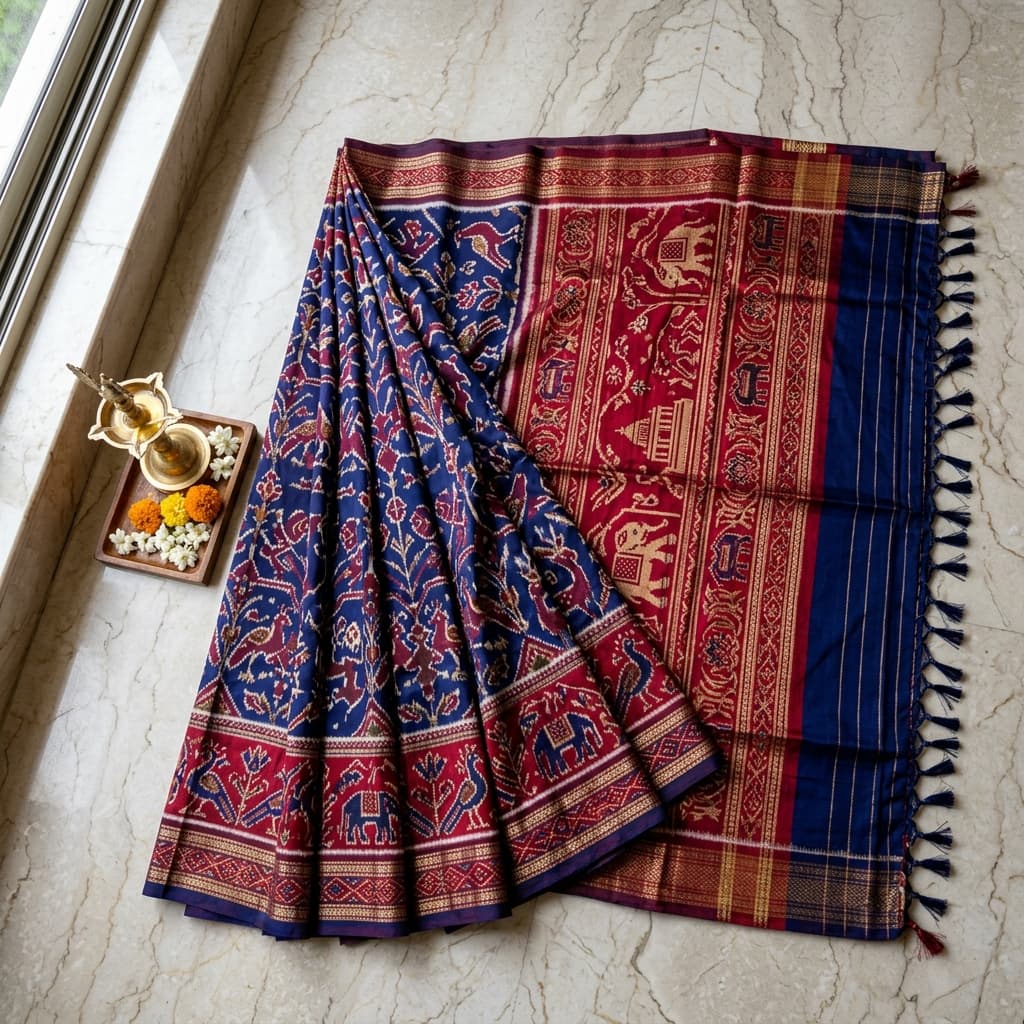
The Growing Problem of Fake Sambalpuri Sarees
With the rising popularity of Sambalpuri Ikat sarees, the market has been flooded with powerloom imitations that are passed off as handwoven originals. These fakes not only cheat customers but also undermine the livelihoods of genuine artisans. Here's how to tell the difference.
1. Check the Reverse Side
The most reliable test: flip the saree over. In a genuine Ikat saree, the pattern appears equally clear on both sides. This is because the threads are dyed before weaving. In a printed or powerloom saree, the reverse side will show a faded or blurred pattern.
2. Look for Slight Irregularities
Handwoven Ikat patterns have a characteristic slight blur or "feathering" at the edges of motifs. This is the natural result of the resist-dyeing process. Machine-made patterns are perfectly sharp and uniform — too perfect to be handmade.
3. Feel the Fabric Weight
Authentic silk Ikat sarees have a distinctive weight and drape. Pure mulberry silk feels cool to the touch and has a natural sheen that changes with light. Synthetic alternatives feel slippery and have an artificial shine.
4. Examine the Selvedge (Edge)
The side edges of a handwoven saree (called selvedge) are slightly uneven and may show where the weaver turned the shuttle. Powerloom sarees have perfectly even, machine-finished edges.
5. Burn Test
Pull a small thread from the saree edge and carefully burn it. Pure silk smells like burning hair and leaves a crushable ash. Synthetic fibers melt into a hard bead and smell like burning plastic.
6. GI Tag Certification
Sambalpuri Ikat has a Geographical Indication (GI) tag from the Government of India. Look for the GI certification label or ask the seller for provenance documentation.
7. Price Check
A genuine handwoven Sambalpuri silk saree takes 45-60 days to create. If the price seems too good to be true (under ₹3,000 for silk), it's almost certainly a powerloom imitation. Authentic pieces typically range from ₹5,000 to ₹25,000 depending on complexity.
Buy With Confidence
At Ambika Handloom, every saree comes with artisan provenance details — you'll know exactly which weaver created your masterpiece and which village it was woven in. We source directly from master artisans, guaranteeing authenticity.